Leh Hill Station: Ultimate Travel Guide with Expert Tips
The right stay. At the right price. Every time.
Find your perfect Himachal Pradesh stay on Unpaqd — with our AI search feature
Curated 4.5+ rated homestays, price-match guarantee, and zero commissions-so you never overpay or settle. Just describe your ideal stay, and we'll do the rest.
Explore stays on UnpaqdUltimate Guide to Leh – Expert Travel Tips
TL;DR Summary
- Leh, the heart of Ladakh, offers stunning Himalayan vistas in this ultimate travel guide.
- Best time to visit Leh: May to September for pleasant weather and clear roads.
- Top attractions include Pangong Lake, Nubra Valley, and Leh Palace for history buffs.
- Ideal for adventurers and culture seekers with unique high-altitude experiences.
- Things to do in Leh: trekking, monastery visits, and scenic drives.
- A must-visit for unparalleled landscapes and serene Buddhist heritage.
Introduction to Leh
I still vividly remember my first sunrise in Leh, standing at the edge of Shanti Stupa as the golden light bathed the rugged Himalayan peaks. The crisp air, the distant chants from monasteries, and the sheer vastness of the landscape left me spellbound. Nestled at over 11,500 feet in Ladakh, Leh is a paradise for those seeking raw natural beauty, ancient Buddhist culture, and thrilling high-altitude adventures. Its barren yet mesmerizing terrain, dotted with vibrant gompas and turquoise lakes, makes it unlike any other hill station in India. Whether you're a solo traveler chasing adrenaline, a couple seeking solitude, or a family eager for unique experiences, Leh has something for everyone. In this guide, you'll discover the top attractions, practical travel tips, the best Leh itinerary, and insider hacks from my two decades of exploring India’s hills. For similar high-altitude vibes, check our Manali guide.
Why Visit Leh? (Key Highlights)
- Breathtaking Himalayan Views: Witness panoramic landscapes that feel otherworldly, especially at sunrise.
- Rich Buddhist Heritage: Explore ancient monasteries like Thiksey and Hemis, steeped in history.
- Adventure Hub: Perfect for trekking, biking, and high-altitude camping in places like Nubra Valley.
- Unique Lakes: Pangong Tso’s changing hues are a photographer’s dream, unlike any other in India.
- Cultural Immersion: Interact with warm Ladakhi locals during vibrant festivals like Losar.
- Serenity at Altitude: Escape the chaos of city life in one of the world’s highest towns.
- Personal Gem: During my 2015 visit, a local family invited me to a traditional Ladakhi tea session—hospitality at its purest!
Top Attractions in Leh
1. Pangong Tso Lake
A surreal high-altitude lake at 14,270 feet, famous for its color-changing waters. Key features include its 134 km stretch (partly in China) and serene camping spots. Entry fee: INR 200 per person (2026 estimate). Best time: May to September for clear views. Insider tip: Stay overnight in a tent to catch the magical sunrise hues.
2. Nubra Valley
A cold desert valley with sand dunes and Bactrian camels, a stark contrast to Leh’s ruggedness. Key features: Hunder village and Diskit Monastery. Entry fee: INR 50 (approx.). Best time: June to August. Insider tip: Ride a camel at sunset for a surreal desert-in-mountains experience.
3. Leh Palace
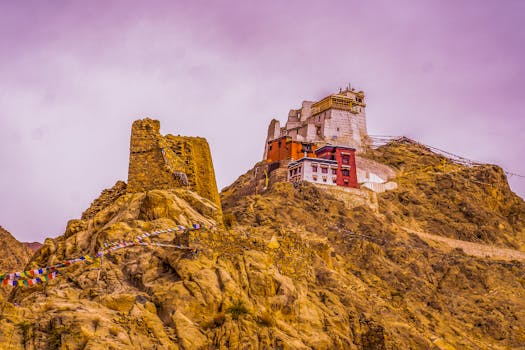
A 17th-century royal palace offering panoramic views of Leh town and Stok Kangri. Key features: museum exhibits and ancient architecture. Entry fee: INR 100. Best time: May to October. Insider tip: Visit late afternoon to avoid crowds and enjoy cooler weather.
4. Thiksey Monastery
A stunning 12-story monastery resembling Tibet’s Potala Palace, perched on a hill. Key features: Maitreya Buddha statue and prayer halls. Entry fee: INR 50. Best time: Early morning for prayer ceremonies. Insider tip: Attend the morning chants for a soulful experience.
5. Hemis Monastery
Ladakh’s largest monastery, known for the annual Hemis Festival with masked dances. Key features: Thangka paintings and a museum. Entry fee: INR 100. Best time: June for the festival. Insider tip: Buy local handicrafts during the festival for authentic souvenirs.
6. Shanti Stupa
A white-domed Buddhist stupa offering peace and 360-degree views of Leh. Key features: sunset views and meditation spots. Entry fee: Free. Best time: Evening. Insider tip: Walk up instead of driving for a rewarding mini-trek.
7. Khardung La Pass
One of the world’s highest motorable passes at 17,582 feet, a thrill for bikers. Key features: dramatic views and photo ops. Entry fee: None, but permits required (INR 600 approx.). Best time: June to September. Insider tip: Acclimatize first to avoid altitude sickness.
8. Magnetic Hill
A gravity-defying spot where vehicles seem to roll uphill, a quirky natural phenomenon. Key features: optical illusion and scenic backdrop. Entry fee: Free. Best time: Daytime. Insider tip: Follow the marked spot precisely for the full effect.
9. Tso Moriri Lake
A lesser-known high-altitude lake at 14,836 feet, ideal for solitude seekers. Key features: birdwatching and serene landscapes. Entry fee: INR 100. Best time: June to August. Insider tip: Visit during full moon for an ethereal reflection.
10. Spituk Monastery
A historic gompa near Leh, known for its ancient relics and views of the Indus River. Key features: Gustor Festival and thangkas. Entry fee: INR 50. Best time: January for the festival. Insider tip: Chat with monks for insights into Ladakhi Buddhism.
Detailed Guides for Top 3 Attractions
Pangong Tso Lake
- History: Formed by tectonic activity, this brackish lake spans India and China, historically significant for trade routes.
- Things to See/Do: Enjoy photography, camp overnight, and spot migratory birds like bar-headed geese.
- Nearby Spots: Spangmik village for local culture and basic stays.
- Location & How to Reach: 160 km from Leh, 5–6 hours by road via Chang La Pass; hire a taxi or bike (INR 3,000–4,000 round trip).
- Insider Tip: Pack warm layers even in summer—nights drop to near-freezing temperatures.
Nubra Valley
- History: Once part of the Silk Route, Nubra was a key trade hub connecting India to Central Asia.
- Things to See/Do: Ride double-humped camels in Hunder, visit Diskit Monastery, and relax by the Shyok River.
- Nearby Spots: Sumur village for hot springs and quieter landscapes.
- Location & How to Reach: 150 km from Leh via Khardung La, 5–6 hours by road; taxis cost INR 3,500–5,000.
- Insider Tip: Carry cash—ATMs are scarce, and card payments rarely work.
Leh Palace
- History: Built in the 17th century by King Sengge Namgyal, it served as the royal residence until the 19th century.
- Things to See/Do: Explore the museum, admire Tibetan-style architecture, and photograph Stok Kangri from the terrace.
- Nearby Spots: Tsemo Fort and Namgyal Gompa, both within walking distance.
- Location & How to Reach: Central Leh, 10 minutes’ walk from the main market; autos charge INR 100.
- Insider Tip: Wear comfy shoes—the climb to the upper floors involves uneven steps.
How to Reach Leh
Leh is well-connected despite its remote location. The nearest airport, Kushok Bakula Rimpochee Airport, is in Leh itself, with daily flights from Delhi (1.5 hours, INR 5,000–8,000 one-way, 2026 estimate), Mumbai, and Srinagar. There’s no railway station; the closest is Jammu Tawi (700 km, 20 hours by road). By road, Delhi to Leh via Manali is a popular route (1,000 km, 2–3 days, INR 10,000–15,000 for a shared taxi or bike rental). Alternatively, take the Srinagar-Leh highway (434 km, 1–2 days). Driving in hilly terrain requires caution—acclimatize to avoid altitude sickness, carry spare fuel, and check road conditions (often closed in winter due to snow). Buses from Manali or Srinagar cost INR 2,000–3,000 per person.
Multi-Day Road Trip Circuits from Major Cities
Since Delhi is the most common starting point for trips to Leh, I’ve curated four diverse road trip circuits that include Leh as a highlight. Each offers a unique flavor of the Himalayas, catering to different interests and timeframes.
Classic Ladakh Circuit: Delhi to Leh via Manali
- Stops & Sequence: Delhi → Manali (550 km, 12–14 hours) → Jispa (140 km, 5 hours) → Leh (330 km, 10–12 hours) → Return via same route.
- Why This Sequence: Manali offers a scenic acclimatization stop, and the route via Rohtang and Baralacha La passes is iconic for its dramatic landscapes.
- Total Duration: 7–9 days.
- Best For: First-timers and families seeking a balanced mix of adventure and comfort.
- Tips: Book taxis or bikes in Manali (INR 20,000–30,000 for round trip); avoid monsoon due to landslides; stop at Sarchu for overnight camping.
Extended Adventure Circuit: Delhi to Leh with Nubra & Pangong
- Stops & Sequence: Delhi → Manali (550 km, 12–14 hours) → Leh (470 km, 2 days with stop at Jispa) → Nubra Valley (150 km, 5 hours) → Pangong Tso (160 km, 5–6 hours) → Return via Leh-Manali-Delhi.
- Why This Sequence: Covers Leh’s top attractions with logical detours, maximizing adventure without excessive backtracking.
- Total Duration: 12–15 days.
- Best For: Adventure enthusiasts and photographers.
- Tips: Get Inner Line Permits in Leh (INR 600); rent bikes for flexibility (INR 1,500/day); pack high-altitude meds.
Budget/Quick Circuit: Srinagar to Leh Round Trip
- Stops & Sequence: Srinagar → Kargil (200 km, 6–7 hours) → Leh (230 km, 7–8 hours) → Return via same route.
- Why This Sequence: Shorter than the Manali route, with Srinagar as a culturally rich starting point and Kargil as a strategic stop.
- Total Duration: 5–7 days.
- Best For: Budget travelers and those short on time.
- Tips: Shared taxis from Srinagar cost INR 2,500–3,000 per person; travel in summer for open roads; book early for cheaper deals.
Offbeat Circuit: Delhi to Leh via Spiti Valley
- Stops & Sequence: Delhi → Shimla (350 km, 8–9 hours) → Kaza (Spiti Valley, 420 km, 2 days) → Manali (200 km, 8 hours) → Leh (470 km, 2 days) → Return via Srinagar-Kargil.
- Why This Sequence: Spiti adds an offbeat, rugged charm, and the loop via Srinagar avoids retracing steps entirely.
- Total Duration: 14–18 days.
- Best For: Offbeat explorers and seasoned road trippers.
- Tips: Roads to Spiti are challenging—use 4x4 vehicles; carry extra fuel; check weather updates for Kunzum Pass.
Note: These circuits can be customized; always check live road conditions via Google Maps or Ladakh tourism apps.
Best Time to Visit Leh
Leh’s weather varies drastically by season. Summer (May–September) is ideal with temperatures of 15–25°C during the day, perfect for sightseeing and road trips; roads are open, and skies are clear. Monsoon (July–August) brings occasional rain but also risks of landslides—avoid long drives. Winter (November–March) drops to -10°C or lower, with heavy snowfall; it’s great for snow lovers or the Chadar Trek, but many roads and passes close. Shoulder seasons (April and October) offer fewer crowds and crisp weather (5–20°C), though some areas may still be inaccessible. Based on 2026 trends, expect summers to remain the peak season for a comfortable Leh itinerary.
Where to Stay in Leh – Recommendations
- Budget: The Grand Himalaya (near Main Bazaar) offers clean rooms at INR 2,000–3,000 per night (2026 estimate); I’ve stayed here for its central location and hearty breakfasts. Book via Booking.com for deals.
- Mid-Range: Hotel Ladakh Palace (Old Town) at INR 5,000–7,000 per night provides cozy rooms with Stok Kangri views; their staff helped me plan day trips. Book via Booking.com for deals.
- Luxury: The Grand Dragon Ladakh (near airport) at INR 10,000–15,000 per night offers top-notch amenities and heated rooms; perfect after a cold Pangong night. Book via Booking.com for deals.
- Curated Stays: Browse unique homestays and boutique options on Unpaqd: Browse Unpaqd stays in Leh
Trip Cost Breakdown (5-Day Trip for 2 People)
| Category | Cost (INR, 2026 Estimate) |
|---|---|
| Transport (Delhi-Leh flight round trip) | 20,000–25,000 |
| Stay (Mid-range, 5 nights) | 25,000–30,000 |
| Food (Local meals, 5 days) | 5,000–7,000 |
| Activities (Entry fees, local taxis) | 8,000–10,000 |
| Total | 58,000–72,000 |
Suggested Itineraries
3-Day Quick Trip
- Day 1: Arrive in Leh, acclimatize; visit Shanti Stupa (evening, 2 hours). Stay in central Leh.
- Day 2: Day trip to Pangong Tso (5–6 hours each way); start at 6 AM. Budget tip: Share a taxi (INR 1,500/person).
- Day 3: Explore Leh Palace and Thiksey Monastery (morning); depart. Tip: Shop for souvenirs at Main Bazaar.
5-Day Immersive Experience
- Day 1: Arrive, rest for acclimatization; evening at Shanti Stupa (2 hours).
- Day 2: Full day at Pangong Tso; overnight camping (book tents at INR 2,000/night).
- Day 3: Return to Leh; visit Leh Palace and local markets (afternoon, 3 hours).
- Day 4: Day trip to Nubra Valley via Khardung La (start 7 AM); camel ride in Hunder.
- Day 5: Morning at Thiksey Monastery; depart. Budget tip: Use shared taxis for day trips.
Ideal For
- Families: Safe, scenic spots like Pangong and cultural experiences at monasteries.
- Couples: Romantic getaways with stunning lake views and quiet retreats.
- Solo Adventurers: High-altitude treks, biking, and offbeat explorations like Tso Moriri.
- Photographers: Endless landscapes, from barren deserts to turquoise waters.
Safety, Permits & Local Etiquette
Leh is generally safe, but altitude sickness is a real concern—acclimatize for 1–2 days upon arrival, stay hydrated, and carry Diamox if advised by a doctor. Inner Line Permits (INR 600) are required for areas like Pangong, Nubra, and Tso Moriri; apply online or via Leh offices. For treks like Chadar, additional permits may apply. Solo female travelers should stick to populated areas and avoid isolated spots at night—locals are friendly, but caution is key. Respect monastery rules (no photography inside prayer halls), dress modestly, and ask before photographing locals. From my trips, I’ve learned to always carry cash—ATMs often run dry.
Hidden Tips from 20+ Years of Travel
- Acclimatize properly—spend the first day resting; I learned this the hard way after a dizzy spell in 2008.
- Bargain for taxi fares outside peak season (May–June); save 20–30% on day trips.
- Visit Hall of Fame museum near Leh airport for untold stories of Indian soldiers—free entry, deeply moving.
- Try Ladakhi butter tea at local cafes in Leh market; it’s salty but energizing for cold days.
- Avoid overpacking—buy woolens from Leh’s Main Bazaar at half the price of city stores.
- For the best sunset, head to Changspa Road’s hidden viewpoints; ask locals for “secret spots.”
- Book flights 2–3 months in advance for discounts; I saved INR 3,000 on my last trip.
- Carry portable oxygen cans (INR 500) from Leh pharmacies—lifesavers at high passes.
Frequently Asked Questions
Q: What are the top things to do in Leh?
Leh offers a mix of natural wonders and cultural gems. Top activities include visiting Pangong Tso Lake for its stunning hues, exploring Nubra Valley’s sand dunes, and touring ancient monasteries like Thiksey and Hemis. Adventure seekers can bike through Khardung La Pass, while history buffs will love Leh Palace. Don’t miss local markets for handicrafts and Ladakhi cuisine.
Q: How to reach Leh from major cities?
Leh is accessible via Kushok Bakula Rimpochee Airport with flights from Delhi (1.5 hours, INR 5,000–8,000), Mumbai, and Srinagar. By road, drive from Delhi via Manali (1,000 km, 2–3 days) or Srinagar (434 km, 1–2 days) with taxis or bikes costing INR 10,000–15,000. Buses from Manali or Srinagar are cheaper at INR 2,000–3,000. Always check road conditions, especially in winter.
Q: Is Leh safe for solo travelers?
Leh is relatively safe for solo travelers, with friendly locals and a peaceful vibe. However, altitude sickness is a concern—acclimatize properly and carry meds. Stick to populated areas at night, especially for solo women, and avoid isolated trails. From my solo trips, I’ve found locals to be helpful, but always inform someone of your plans.
Q: What's the best time to visit Leh?
The best time to visit Leh is May to September, with pleasant daytime temperatures (15–25°C) and open roads. Winter (November–March) is ideal for snow treks like Chadar but brutally cold (-10°C or lower). Shoulder months (April, October) have fewer crowds but limited access. Avoid monsoon for safer travel due to landslide risks.
Q: Do I need permits for Leh attractions?
Yes, Inner Line Permits (INR 600, 2026 estimate) are required for key areas like Pangong Tso, Nubra Valley, and Tso Moriri. Apply online via the Leh administration portal or through local agents in Leh. Some treks, like Chadar, may need additional permits. Carry ID proofs and permit copies during travel for checkpoints.
Q: How much does a trip to Leh cost?
A 5-day trip for two to Leh costs around INR 58,000–72,000 (2026 estimate), covering flights (INR 20,000–25,000), mid-range stays (INR 25,000–30,000), food, and activities. Budget travelers can cut costs by using shared taxis and guesthouses (INR 40,000 total). Peak season flights and hotels spike prices, so book early. Costs vary based on travel style and season.
Q: What's a sample itinerary for Leh?
For a 5-day Leh itinerary, start with acclimatization and Shanti Stupa on Day 1. Day 2, visit Pangong Tso with overnight camping; return on Day 3 to explore Leh Palace. Day 4, head to Nubra Valley via Khardung La, and wrap up with Thiksey Monastery on Day 5 before departure.
Q: Budget stays in Leh?
Budget stays in Leh like The Grand Himalaya near Main Bazaar cost INR 2,000–3,000 per night (2026 estimate), offering clean rooms and central access. Many guesthouses in Changspa Road area are also affordable at similar rates with basic amenities. Homestays provide a cultural touch for INR 1,500–2,000. Book early in peak season (May–September) via platforms like Booking.com or Unpaqd for deals.