Any Stay. Anywhere. Up to 26% Off
Unlock rates up to 26% off, one call away
We hunt down one-on-one deals across 2M+ stays in 50+ countries-not listings, just better prices.
The Rise of Homestays: A Travel Trend That’s Here to Stay
Homestays vs. Hotels: Why Travelers Prefer Homestays in 2025—this debate is more relevant than ever. Travelers are increasingly choosing homestays over hotels for a more personalized, cost-effective, and immersive experience. Whether you’re a digital nomad, a solo backpacker, or a family, homestays offer a unique way to connect with destinations like never before.
But what’s fueling this shift? Let’s dive into the data, traveler preferences, and why homestays are the future of hospitality.
1. Cost-Effective Travel Without Compromising Comfort
Hotels come with a hefty price tag, especially in popular destinations. Accor, Europe’s largest hotel group, reported a 5.7% growth in revenue per available room (RevPAR) in 2024, surpassing market expectations, and making budget-conscious travelers seek affordable alternatives. Read this complete report here.
Homestays vs. Hotels: Why Travelers Prefer Homestays in 2025 for Budget-Friendly Stays
- Hotels: ₹12,500–₹25,000 per night in major cities.
- Homestays: ₹5,000–₹10,000 per night for the same locations.
- Savings: Up to 40%, plus kitchen access for home-cooked meals!
2. The Demand for Unique and Local Experiences
Modern travelers crave authentic cultural experiences, something hotels often fail to deliver. A survey revealed that 70% of consumers are interested in cultural immersion and prioritize immersive stays that allow them to connect with local culture. Read more about this here.
Why Local Experiences Matter in 2025
- Hosted by locals who provide insider tips and recommendations.
- Often located in residential neighborhoods, not tourist hotspots.
- Include unique cultural experiences like cooking classes, guided walks, and local festivities.
Want to experience destinations like a local? Read more about why travelers seek authentic experiences.
3. Personalized Service That Hotels Can’t Match
Unlike hotels, where services are standardized, homestays provide a level of personalization that makes guests feel at home.
- Hotels: Fixed check-in/out times, generic service.
- Homestays: Flexible check-in, customized local recommendations.
- Hotels: Standard amenities, impersonal experience.
- Homestays: Tailored stays with warm, one-on-one interactions.
Tired of impersonal hotel service? Learn more about the benefits of homestays vs. hotels.
4. Work-from-Anywhere Friendly
With remote work on the rise, travelers are looking for long-term, comfortable stays in work-friendly environments.
Homestays vs. Hotels: The Best Choice for Remote Workers in 2025
- Hotels: No dedicated workspace, noisy environment.
- Homestays: Quiet, work-friendly setups with strong WiFi.
- Hotels: Costly business centers.
- Homestays: Free high-speed internet, long-term discounts.
Working remotely? Check out the top destinations for digital nomads!
5. Sustainability & Eco-Friendly Stays
A growing number of travelers are prioritizing sustainable accommodations, and hotels often fall short in this regard.
Homestays vs. Hotels: The More Sustainable Travel Choice?
- Hotels: High carbon footprint, mass-produced food, excessive energy consumption.
- Homestays: Lower environmental impact, local sourcing, and eco-friendly practices.
- Bonus: Some homestays integrate solar power, rainwater harvesting, and organic gardens!
6. Safety and Hygiene Standards
Post-pandemic, travelers are more conscious than ever about hygiene and safety when choosing accommodations. While hotels implement standardized cleaning protocols, homestays often provide a safer, less crowded environment with more personalized hygiene measures. But how do homestays compare in terms of safety? Here’s a quick breakdown of the key hygiene and safety advantages of staying in a homestay:
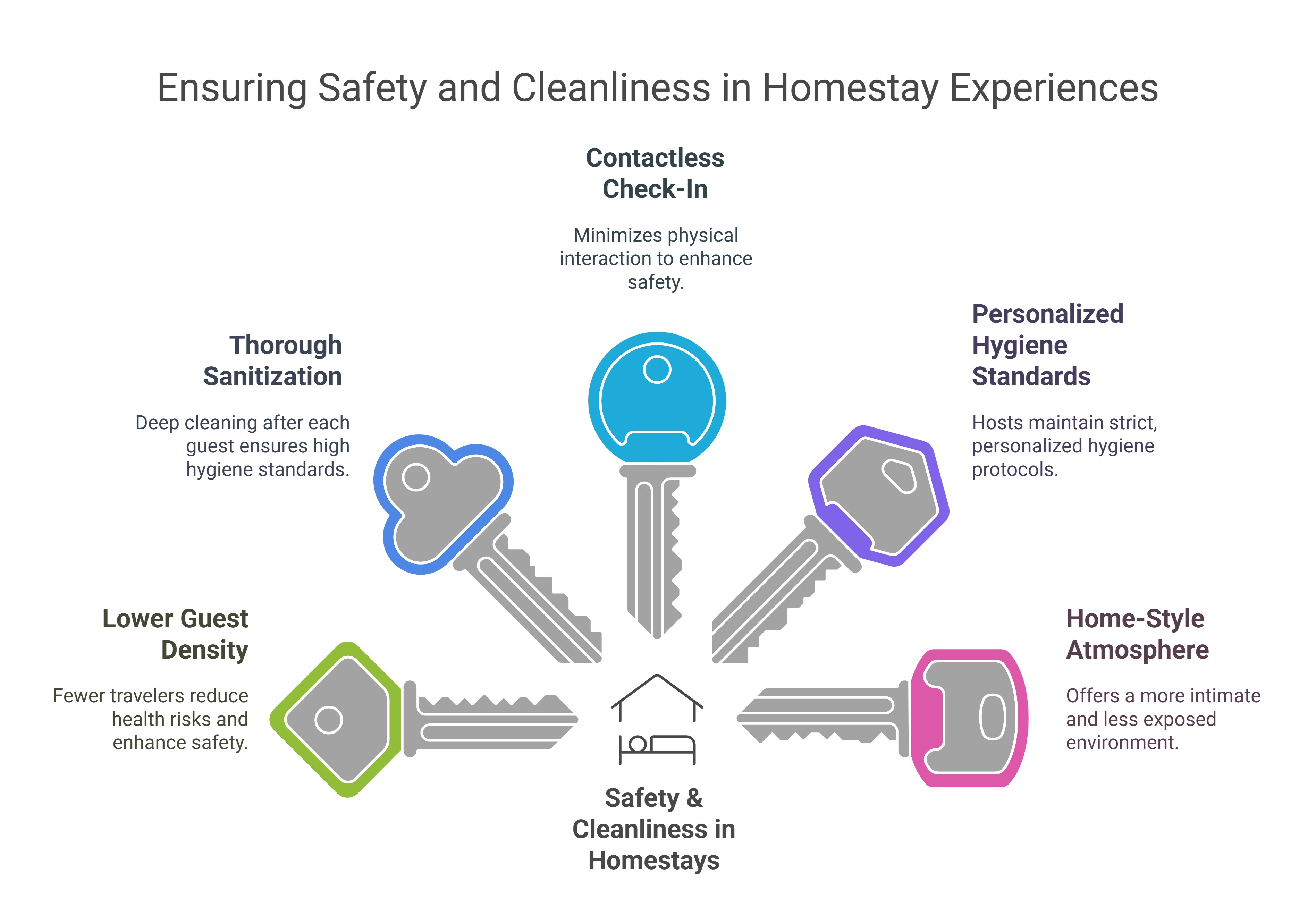 Data-Backed Safety Insights:
- A CDC study (2023) revealed that small-scale accommodations pose lower health risks than crowded hotels.
- Homestay hosts often ensure deep cleaning between guests, with higher transparency than hotel chains.
Want to ensure a hygienic stay? Read our Homestay Safety Guide before booking.
Final Thoughts: Homestays vs. Hotels – Why Travelers Prefer Homestays in 2025
With affordability, local charm, and tailored experiences, it’s no surprise that homestays are outshining hotels in 2025. Whether you’re seeking budget-friendly travel, immersive cultural stays, or a cozy workcation, homestays offer unmatched flexibility and value.
Ready to upgrade your travel experience? Find your perfect homestay today at Unpaqd!
FAQs About Homestays vs. Hotels in 2025
1.Are homestays safe for solo travelers?
Yes! Many homestays offer verified listings, guest reviews, and security features like gated entrances or host-assisted stays.